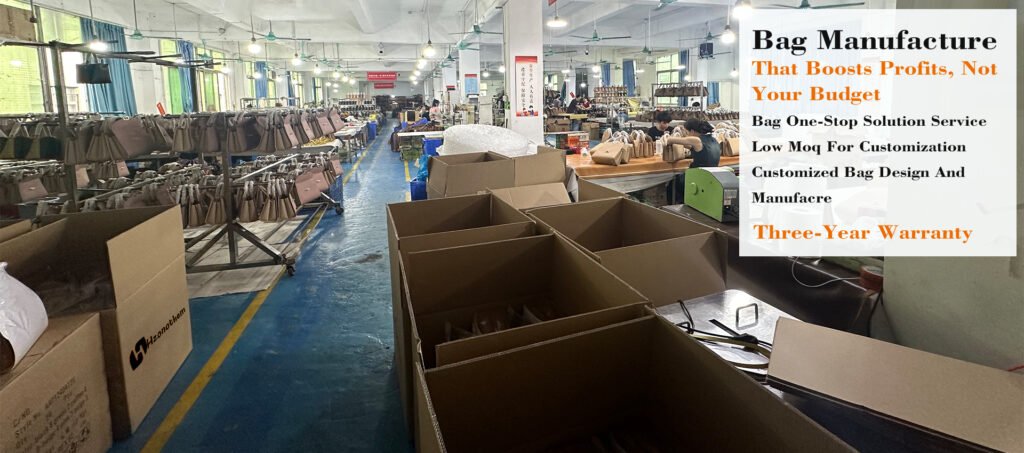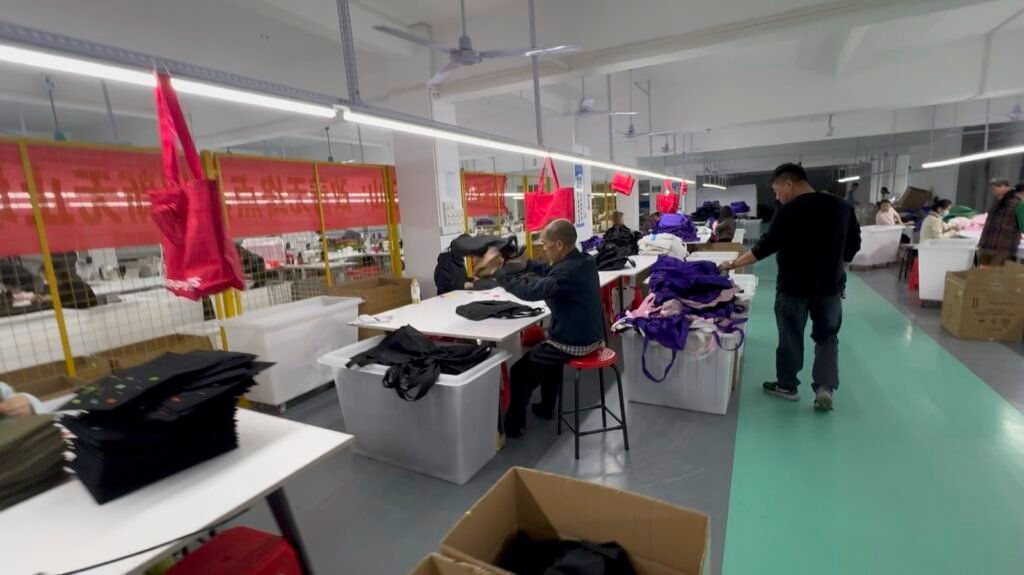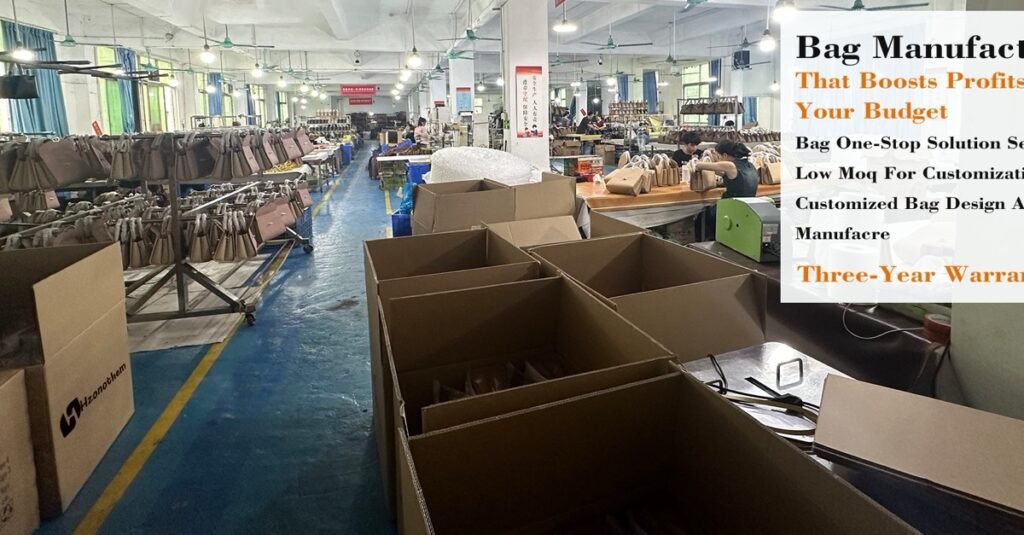
We make bags in Guangzhou, and Japan is one of the three markets we ship to most. The other two are the United States and Russia. When a Japanese buyer sends a purchase order, the conversation does not start with price. It starts with the needle-check record, the label, and a list of small checks that American and European buyers usually leave to final inspection.
This page is for anyone sourcing bags for Japan. It covers what has to go on the label, why needle detection is not optional, and the quality standard a Japanese buyer will hold you to before the cartons leave our floor. It is written by our team, not by a compliance agency, so it is about what actually comes up in a real order rather than what a regulation summary looks like.
If you have not sourced from China before, start with our complete guide to leather bag manufacturing, then come back here for the Japan-specific rules.
Two labels, not one
Japan has a mandatory labeling law and a set of voluntary industry labels, and buyers tend to want both on the same bag.
The mandatory one is the Household Goods Quality Labeling Law. It requires material composition and care instructions on a long list of designated household goods, and bags fall inside that list. The label has to say what the shell and the lining are made of â cowhide outer, polyester lining, for example â and how the customer should care for it. The country of origin sits on the same label, where the customer can see it.
Then there are the association labels. The Japan Handbag Association and the Japan Luggage Association run voluntary formats for bags whose exterior surface is at least 60% leather. Those labels state the type of leather and the country of origin, so a customer can tell whether they are buying cowhide or sheepskin and where it was made before they look at the price tag.
The practical lesson is that a generic English care label is not enough. A Japanese label needs the material composition written in Japanese terms, a care method, the country of origin, and, for leather bags, the leather type. We print that label as part of the order rather than treating it as a last-minute add-on. If you want the US and EU version of the same conversation, we covered it separately in our bag labeling guide for US and EU retailers.
Needle detection is not optional
Japan is the one market where a broken needle inside a bag is treated as a recall event rather than a defect. Soft goods bound for Japan are routinely passed through a needle detector before packing. If the detector finds a needle fragment â usually a broken sewing machine needle left inside a seam â the bag is pulled and the whole batch is checked again.
This is the first thing to confirm with your factory, before you confirm anything about the price. Ask whether the factory runs needle detection on Japan-bound orders and whether it keeps a record. A factory that has never heard the question is a factory that has not shipped to Japan in any serious volume.
We run needle detection on orders for Japan and keep the record with the shipment file. The honest tradeoff is that it adds time to packing and a small cost per unit, and a US order at the same price might not need it. We quote it as part of the order instead of burying it, because a buyer who discovers needle checks at the port has already lost a month.
What Japanese QC actually measures
American and European buyers usually work from an AQL sample: pull a number of bags, inspect them against the standard, and release the batch if the defect count stays under the limit. Japanese buyers often want 100% inspection on the details they care about, and those details are the ones that disappear in a photo.
Here is what comes up on Japanese orders:
- Seam density. The number of stitches over a set length, checked at the seams and at the corners.
- Thread ends. Loose thread ends are cut and sealed, not tucked out of sight.
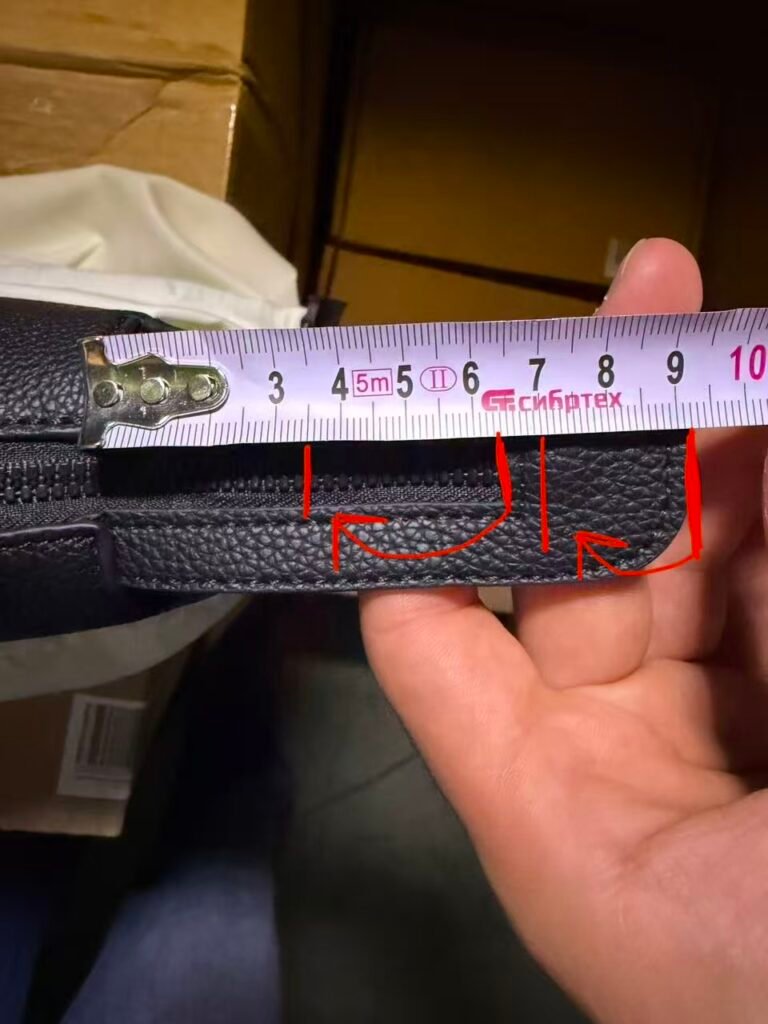
- Symmetry. Left and right panels, handle placement and logo position measured against the approved sample.
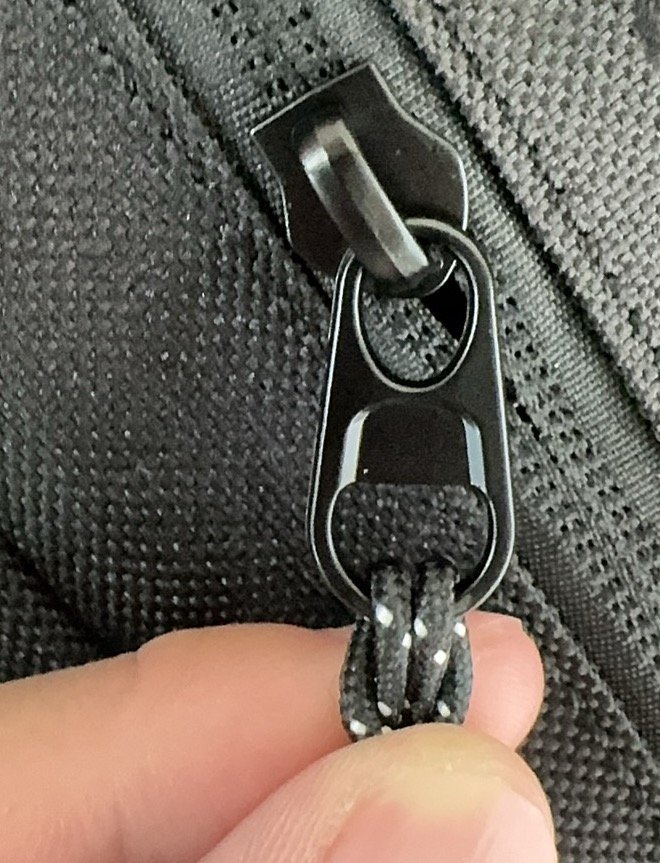
- Hardware plating. Plating thickness and evenness on buckles, zipper pulls and rivets, because plating that wears through looks cheap in a store.
- Lining feel. Japanese buyers touch the lining. A scratchy or sticky lining is rejected even when the outside is perfect.
We hold our own defect rate under 2%, and every bag carries a three-year warranty against defects in workmanship and materials. For a Japanese buyer, those numbers matter less than the consistency behind them. A 300-piece reorder has to match the 50-piece first order, or the growth is a liability instead of an opportunity.
What the sample round should settle
The sample is where a Japan-bound order is won or lost. We make a pre-production sample in five to seven days, and the first review with a Japanese buyer is almost never about the style. It is about whether the seams are straight, the corners are clean, and the label matches the one on the drawing.
Put these into the specification before the sample is cut and most of the back-and-forth disappears:
- Leather type and country of origin, exactly as they will appear on the label
- Material composition of the shell and lining, in the wording the label will use
- Thread colour and stitch density at the seams
- Hardware finish and the plating standard
- The needle-detection record requirement
A fixed specification is the difference between a reorder and a project. When the spec is written once and every later order refers back to it, the 300th bag comes out the same as the first. We treat that as the whole game, and it is why the specification sheet matters more than the quote on a Japan-bound order.
A small first order, and why it works
One of our Japanese buyers started at 50 pieces a month on an existing style and now orders 300 pieces a month. The starting order was deliberately cautious. It was a test of everything around the bag, not just the bag itself: how fast the sample came back, whether the specification stayed fixed, and whether the photos arrived before each carton was sealed.
That is the part most buyers skip. Japan works across a time difference, so a delay that is invisible in an email becomes obvious to a customer waiting for stock. Questions got answered the same working day, every shipment was inspected at material intake, during production and again at final packing, and the packing list was sent before the carton closed. None of that is glamorous, and all of it is what kept the reorders coming. You can read the full story in our case study of a Japanese client who grew from 50 to 300 pieces a month.
Japan fits a market-by-market checklist
A useful way to think about bag compliance is to keep a separate checklist per market. The rules do not overlap as much as they seem to, and mixing them up is how labels go wrong:
| Market | What it is about | Where to start |
|---|---|---|
| United States | Children’s products: lead and phthalate limits, CPC and tracking labels | CPSIA for children’s backpacks |
| European Union | Packaging registration and LUCID for importers | Germany packaging law for bag importers |
| Russia / EAEU | EAC conformity and labeling | EAC labels for bags to Russia |
| Japan | Household goods labeling, needle detection and 100% inspection | This page |
What to ask your factory before you commit
Before you place a Japan-bound order, get a straight answer to these five questions:
- Do you run needle detection on Japan orders, and will I get the record?
- Can you print the household goods label in Japanese, with material, care and origin?
- For leather bags, will the label state the leather type and country of origin per the association format?
- What is your seam and symmetry standard, and how do you hold it across reorders?
- Will I get a pre-production sample before bulk, and how fast?
A factory that answers all five clearly is one that has done this before. Ours would be: yes, we run needle detection and send the record; yes, we print the label in Japanese; yes, we state leather type and origin; our defect rate stays under 2% and every bag carries a three-year warranty; and the pre-production sample takes five to seven days.
Japan rewards patience. The first order is small, the checks are slow, and the reorders are steady. That is a better deal than a big first order that falls apart on the second shipment.