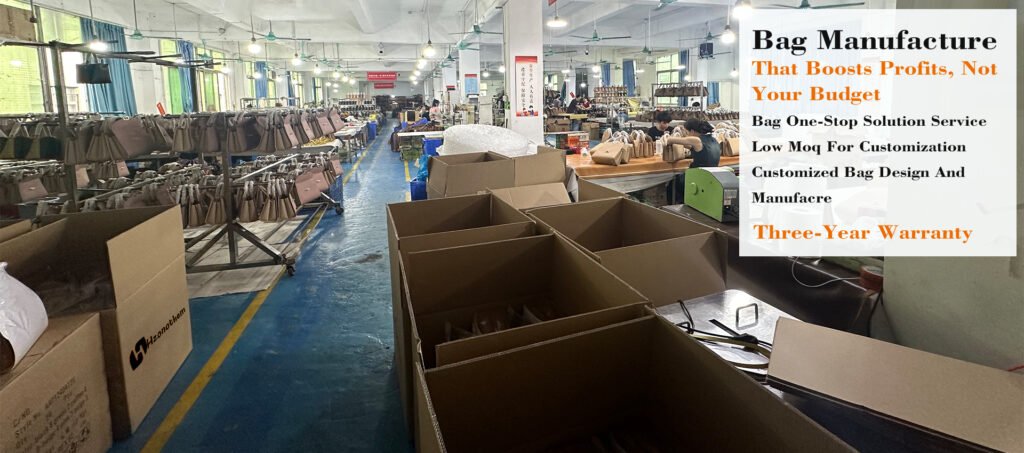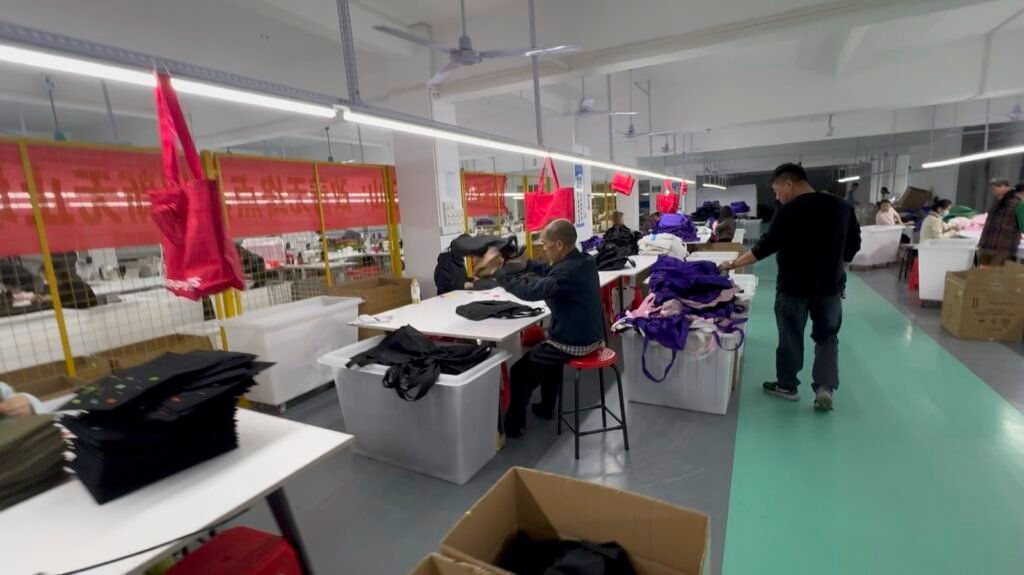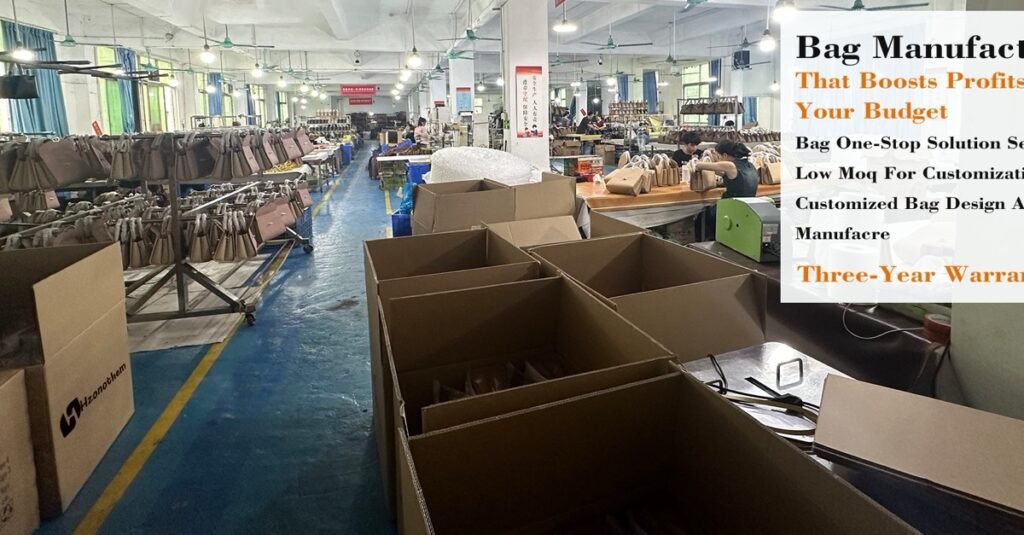
When a buyer first asks us to ship bags into a German Amazon warehouse, the carton stops being just a box. It becomes regulated packaging, and the follow-up question is always the same: “Can your factory handle the German packaging registration for us?” We can handle part of it. We can’t handle all of it — and the part we can’t handle is exactly the part that gets importers fined. Here is the split of work we actually describe to buyers, so nobody finds out about Germany’s packaging law after the shipment is already on the water.
What Germany’s packaging law actually is
Germany regulates packaging under the Verpackungsgesetz (VerpackG), its Packaging Act. Any company that places packaging on the German market for the first time counts as a “producer” in the legal sense, and that definition reaches importers. If you import bags and you carry legal responsibility for the goods when they cross the border, you are the producer — even though we are the ones cutting and sewing them here in Guangzhou.
Two moving parts get mixed up constantly. One is the LUCID packaging register, run by the Zentrale Stelle Verpackungsregister (ZSVR): every producer has to register and receive a LUCID number before the first shipment. The other is the dual system. Packaging that typically ends up as household waste has to be licensed with a dual-system operator, so the cartons and poly bags actually get collected and recycled. Registration and licensing are not the same thing. Registration gives you a number; licensing gives you collection.
What the factory does, and what stays yours
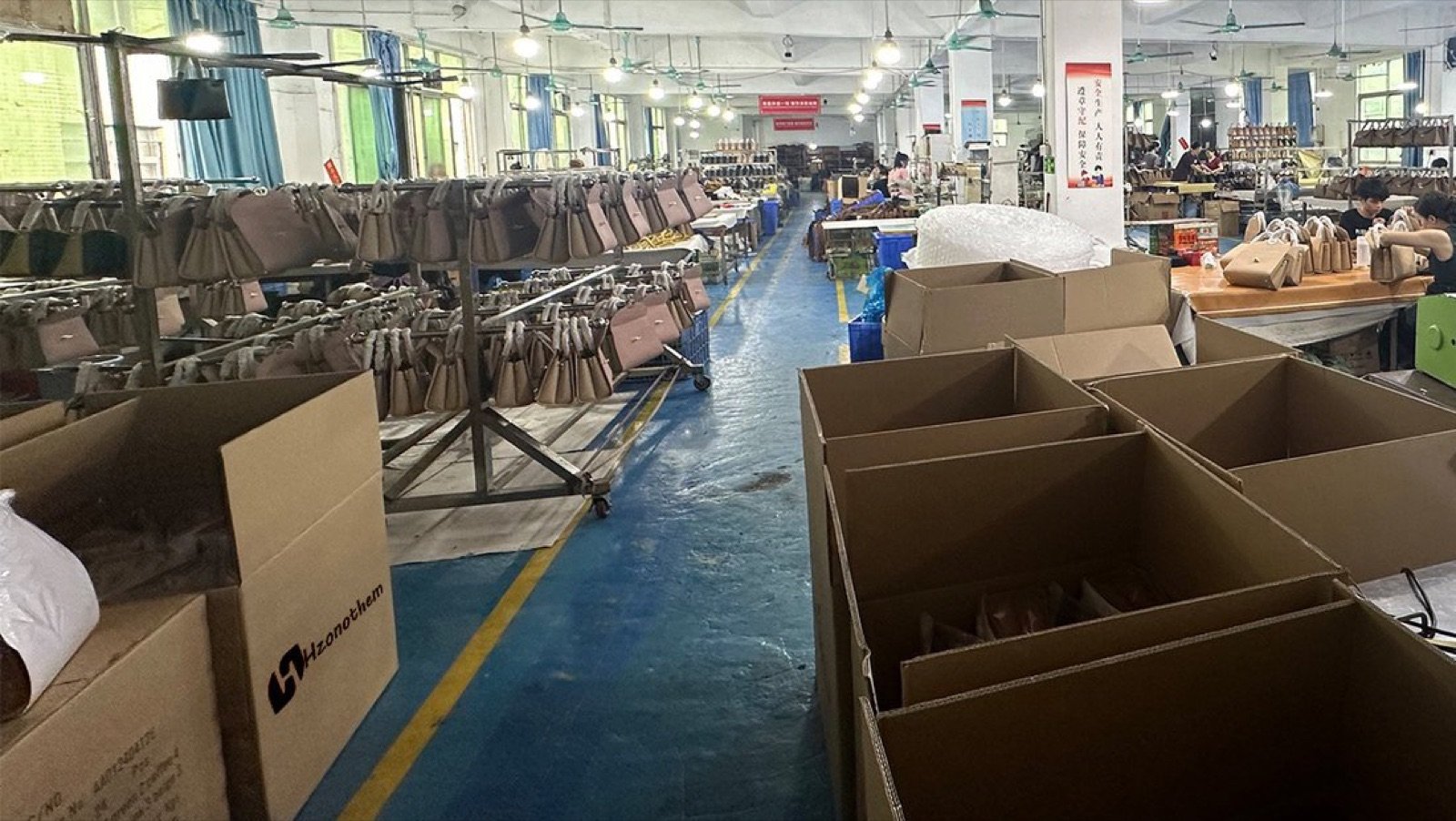
This is the part we can be concrete about, because it is our side of the line. We have been making bags in Guangzhou’s Huadu district since 2006, and more than 270 brands have run orders through our lines. With 65 people across 8 production lines and over 200,000 bags a year, we build thousands of export cartons, so carton specs are not theoretical to us. For an export order we specify the carton grade, the size, the units per master carton and the weight — and we can hand you the packaging material and weight data that the register asks for in its volume reports.
Concretely, when we quote a 200-piece style, the packaging line item is not a guess. We confirm how many units fit a master carton, whether each bag gets its own poly bag or a tissue wrap, and the weight of the empty carton against the packed carton. That lets us hand you one number per SKU for your LUCID volume report instead of a range. It is the same discipline we use on our 5–7 day sample lead time and our under-2% defect rate — the numbers exist because someone measured them at the line, not because someone estimated them in an email.
| Step | Who does it | What it means in practice |
|---|---|---|
| Carton and poly-bag specs | Factory | We quote grade, size, units per carton and weight |
| Packaging weight and material data | Factory | We weigh cartons and poly bags for your report |
| LUCID registration and number | Importer (or a German authorized rep) | A personal obligation, done before shipping |
| Dual-system licensing | Importer | Fee based on the packaging volumes |
| Annual volume data report | Importer or authorized rep | Filed with the register each year |
| Printing the number on cartons and labels | Factory, once you give us the number | We can print it; we can’t invent it |
That last row matters more than it looks. We can print your LUCID number on a carton or a poly bag the same way we print country of origin and care labels — but only after you give us the number. We cannot register, and we cannot generate the number, because the obligation attaches to the producer, and in an import the producer is you.
The honest part: what we say no to
We will not register on your behalf, and you should be wary of anyone promising that a Chinese factory can “handle all of Germany” for you. Registration is a personal obligation under VerpackG. An authorized representative in Germany can take on part of the reporting for a foreign company with no German establishment, but the legal responsibility does not move onto us. What we can genuinely do is the packaging engineering: exact carton weights, materials and the markings printed on them. That is the data you feed into LUCID and the dual system, and it is the piece most importers don’t have in a clean spreadsheet.
A second honest point: most of our bags today ship to the US, Japan and Russia. We are not yet shipping retail orders into Germany, so the importer-side steps below are what VerpackG requires — not a story dressed up as a German customer we don’t have. I’d rather say that plainly than invent one.
The mistakes that get bag importers fined
Here are the four we hear about, and they almost always come from treating packaging as an afterthought.
- Shipping before registering. The LUCID number has to exist before the packaging is placed on the market, not after the first carton lands in a German warehouse.
- Registering but never licensing. A LUCID number without dual-system participation for household packaging still leaves you non-compliant, and the register can see the mismatch.
- Registering once, then going silent. The volume data report is annual. One-time registration is not a one-time obligation.
- No number anywhere. Where the number needs to appear, the packaging and commercial documents have to carry it — and that is the part we can only print once you supply it.
Non-registration is a finable offence in Germany, and the fine can be many times the cost of the cartons themselves. If your bags also go to the US or the wider EU, this sits next to a different set of rules: country of origin, Prop 65 and REACH chromium-VI limits, and the EU’s responsible-person requirement. We keep those in one place in our guide to US and EU bag labeling and packaging requirements.
Why bags are a little worse than they look
One bag order usually means three kinds of packaging at once: the poly bag around each unit, the inner carton and the export master carton. Germany’s law counts all of them, and the weights add up differently at 200 pieces than they do at 2,000. That is one reason the split of work above starts with the factory’s carton specs — if the weights and materials are not recorded at the source, the importer is left guessing when the annual report comes due. At our standard MOQ of 200 pieces per style, we quote the carton plan together with the sample, so the packaging data exists before the order is even confirmed. It is a small discipline that saves a buyer from reconstructing weights months later.
The short checklist before you ship to Germany
- Register with LUCID and get your number before production finishes.
- License your sales packaging with a dual-system operator.
- Send us the LUCID number so it is printed on the cartons and documents.
- Ask us for the carton and poly-bag weight and material breakdown for your report.
- File the annual volume report, or make sure your German authorized representative does.
If this is your first German shipment, build the five steps into the same calendar you use for production and freight, because registration is fast but the fine for skipping it is not.
Packaging law is one thread in a longer compliance story, and it is a thread that belongs to the importer, not the factory — the factory’s job is to give you the packaging data and the printed markings that make your registration usable. We covered the Russian equivalent in our piece on EAC labels for bags to Russia, and the marketplace side in Amazon FBA bag packaging. If you are still working out the cost of bringing bags in at all, our guide to importing leather bags from China walks through shipping and payment. And if you want the full picture of working with a Guangzhou factory — materials, MOQ, samples, quality — start with our complete guide to leather bag manufacturing in China.