Almost every buyer we work with has a story about the first supplier. The price was good, the sample was fine, and then something went wrong: the bulk order did not match the sample, a technical question went unanswered, or a delay was explained as “the factory is busy” by someone who did not appear to work in a factory.
There is nothing wrong with trading companies in principle. Many are competent, and some add real value. The problem is when a trading company presents itself as a factory, because you are then paying factory prices for a middle layer you did not agree to, and you lose direct control over quality.
This guide lists the checks that actually distinguish the two. All of them can be done before you place an order, in under an hour.
Why the difference matters to you
Price. A trading company adds a margin. You are not necessarily overpaying — a good trading company can aggregate volume and negotiate better than you could alone. But you should know which model you are buying into.
Speed of answers. A factory can answer technical questions in minutes because the person answering is standing next to the production line. A trading company relays your question and comes back tomorrow, or guesses.
Accountability when something goes wrong. With a factory, the person who made the mistake is in the same building as the person who has to fix it. With a trader, quality issues become a negotiation between three parties.
Custom work. New patterns, custom hardware, and lining changes all need production input. Traders can arrange these, but the feedback loop is longer and the details get lost in translation.
Eight checks you can run before ordering
1. Look at the business licence and its scope
Every Chinese company has a business licence (营业执照) with a registered scope of business. Ask for a copy. A factory’s scope includes manufacturing terms; a trading company’s scope typically lists wholesale, retail or import-export instead.
This is not conclusive on its own — some factories hold both — but it is a fast first filter, and it takes one message to get.
2. Ask for a live video call in the workshop
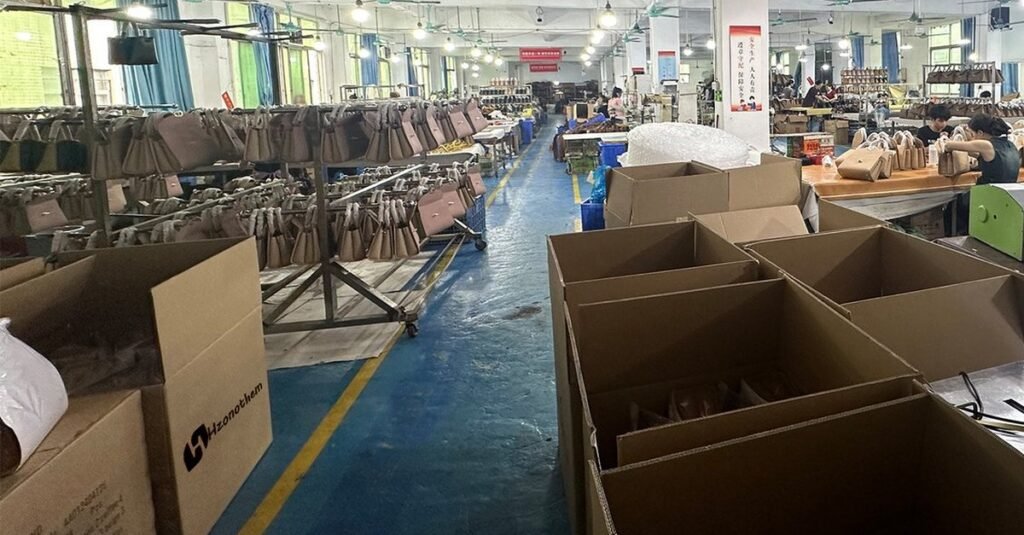
This is the single most useful check, and it separates the real factories instantly. Ask for a video call, on the phone, walking through the production floor. Not a pre-recorded clip, and not a photo album.
What to watch for on the call:
- Are there people working, and do they look like they are used to being there?
- Can you see cutting tables, stitching lines, and a packing area, or only a showroom?
- Does the person holding the phone know the names of machines and stations?
- If you ask them to walk to the sample room, do they get there?
A trading company will usually offer to arrange a call “at the factory, later”. A factory will just walk over and start filming.
3. Ask technical questions only a producer can answer
Price questions are easy to relay. Production questions are not. Try these:
- What is your stitching density on load-bearing seams, and why?
- Which leather layer is this, and how does it differ from the layer above and below it?
- What is your defect rate, and how is it measured?
- How many pieces fit in one carton for this style, and what is the carton’s volume?
- What do you test on the zipper before packing?
Answers that come back in minutes, with specifics, indicate someone close to production. Answers that are vague, or that arrive the next day, indicate a relay.
4. Ask for a sample lead time and hold them to it
Sampling capacity is a genuine constraint inside a factory. A factory that can produce a pre-production sample in 3 to 5 days has a working sample room and an interest in your order. A lead time of three weeks usually means your sample is queued behind someone else’s bulk order — or subcontracted.
5. Ask what happens when a defect is found
Ask the question directly: what is your process when a defect is found during inspection? A factory will describe stations, checks and a decision about rework versus rejection. A trader will describe a policy.
6. Ask who owns the pattern and the tooling
If you are paying for a new pattern or custom hardware tooling, ask who holds it and what happens to it if you stop ordering. With a factory, the pattern lives in their sample room and can be reused for your reorders. With a trader, it may live somewhere you never see.
7. Ask them to describe their packaging line
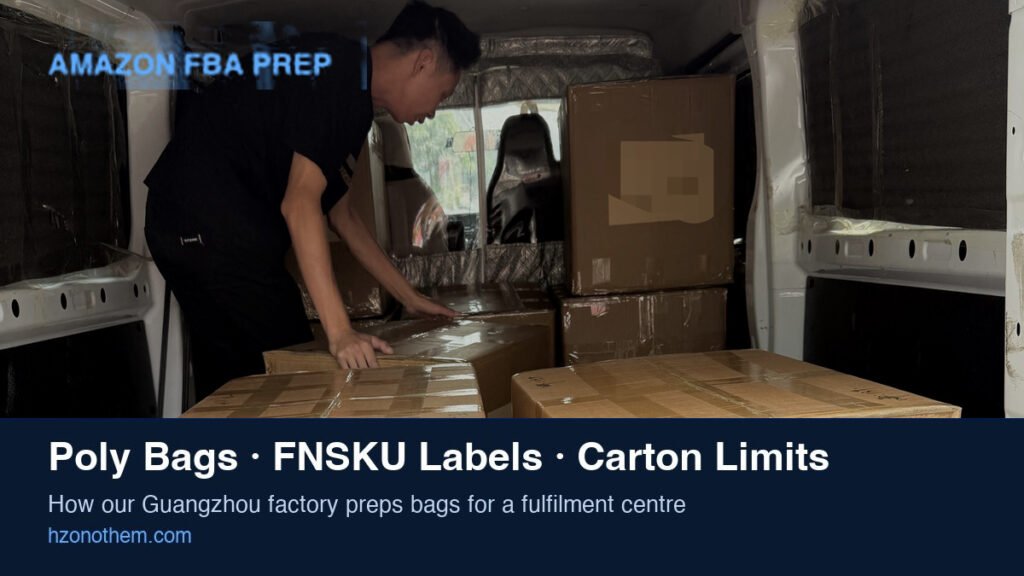
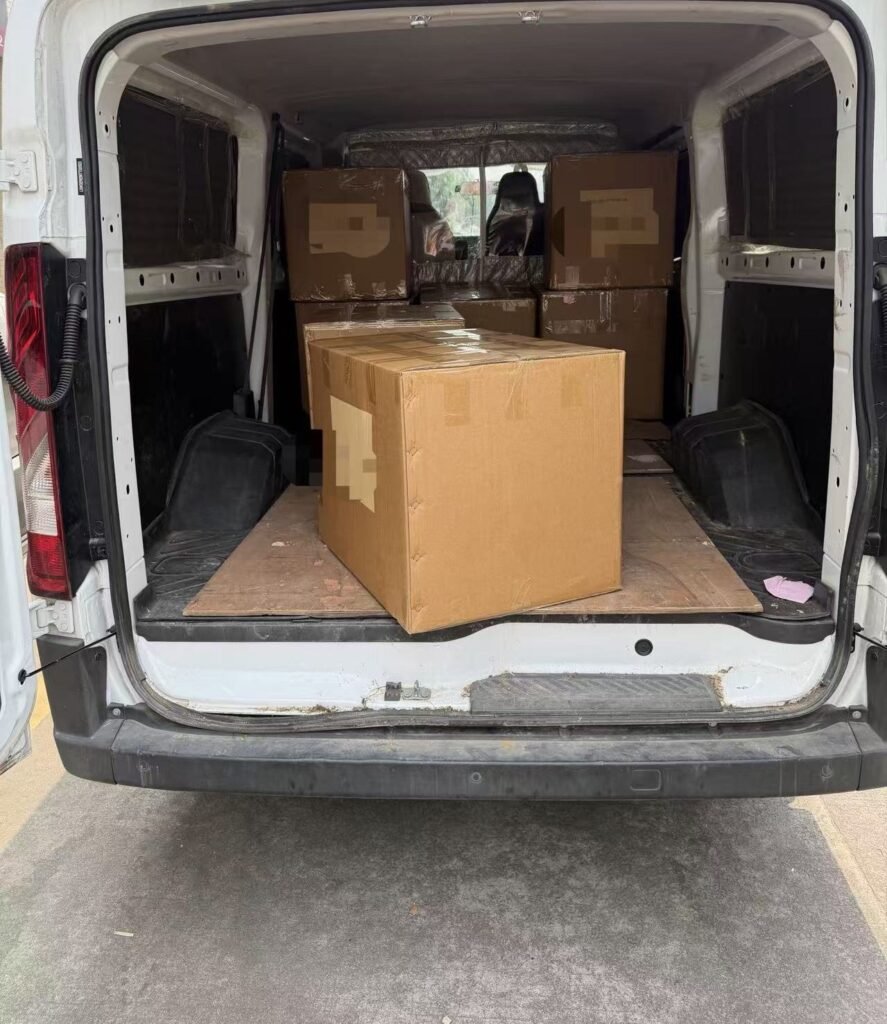
This is a question almost nobody asks, and it is revealing. Ask how bags are packed — poly bag, dust bag, tissue, carton, carton label — and who puts the labels on. A factory can describe this in detail because it happens in their building every day.
8. Ask for references and check them
Ask for two or three existing customers who buy similar products. A factory with a real customer base can usually name a brand or a country. Ask what the customer orders and how long they have ordered it — then, if you can, verify with the customer directly.
Red flags worth taking seriously
- The address is an office building. Many factories have offices in the city and production outside it, which is normal. But if there is no production address at all, ask why.
- No fixed MOQ. A supplier who agrees to any quantity immediately, with no discussion, is either brokering your order to someone else or planning to disappoint you.
- Price noticeably below every other quote. Something is missing: a lower grade of material, thinner hardware, fewer stitches, or the price is simply not real.
- Photos that appear elsewhere. Reverse-image-search the factory photos. Stock or reused images are a strong signal.
- No one can answer a question about the sample room. Every factory has one. If the concept does not land, that is informative.
- Payment terms that change late. Legitimate factories have stable payment terms. Sudden changes, especially after you have committed, deserve scrutiny.
A short script for the first video call
If you only have ten minutes, use them like this:
- “Can you start at the cutting tables and walk towards packing?” — proves the floor is real and continuous.
- “Show me the sample room and the patterns for this style.” — proves design capability.
- “What is your defect rate, and how do you measure it?” — proves they measure quality.
- “How many pieces per carton for this style?” — proves they know their own packing.
- “Can we do a 50-piece trial order?” — proves they will work at your scale.
Anyone who handles those five comfortably is worth a sample order. Anyone who deflects two of them is not.
Where we stand on this
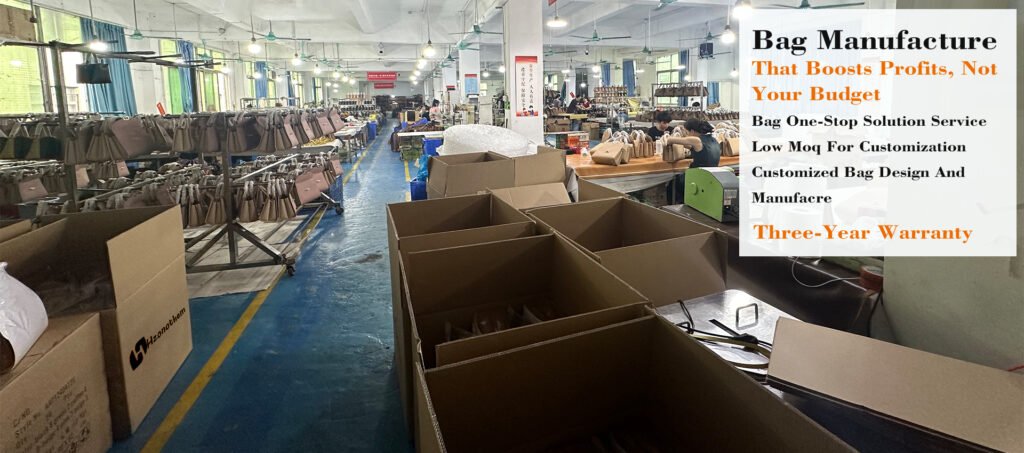
We are a factory. HZONOTHEM has been manufacturing bags in Guangzhou for 20 years, and we have supplied more than 270 brands. If you want to verify that, ask us for a live video call and we will walk you through the cutting floor, the stitching lines and the sample room. If you would rather start with a small order, our MOQ is 50 pieces per style, and samples take 3 to 5 days.
We would rather answer these questions up front than explain a problem later.
Frequently asked questions
Is it always bad to buy from a trading company? No. A good trading company can handle logistics, consolidate multiple factories, and manage quality on your behalf. The issue is transparency — you should know which model you are buying, and pay accordingly.
How do I verify a business licence? Ask for the licence and the unified social credit code. Chinese company registration information can be checked through public national credit information services, and the registered scope should include the manufacturing activities claimed.
What if the factory refuses a video call? Treat it as an answer in itself. A refusal is unusual for a manufacturer. If they offer a call later, ask for a specific time and see whether it happens.
Can a trading company offer a low MOQ? Often yes, because they place your order inside someone else’s production run. The trade-off is less control over materials and timing.
What is the quickest way to test a new supplier? Place a small order and judge the sample. A 50-piece trial tells you more about communication, accuracy and packaging than any number of brochures.
Test us with a small order
Send us a photo of the style you want, your quantity, and whether you need your logo on it. We quote within 24 hours, produce a sample in 3 to 5 days, and will happily start you at 50 pieces per style.
See the kind of work we do across tote bags, crossbody bags, laptop backpacks and leather handbags — or go straight to requesting a quote.
If you are earlier in the process, start with the complete buyer’s guide to sourcing leather bags from China.
Styles we produce in this category include tote bags, work tote bags, laptop tote bags, purses and handbags and hobo bags.
Once you have picked a supplier, the questions turn to OEM vs ODM and lead times.