Client: a US school backpack seller, selling through Amazon and their own online store Starting volume: 30 pieces a month Current volume: 400 pieces a month The problem this case is actually about: one product, two channels, and a seasonal category
A different category, different constraints
Everything that works for a leather handbag has to be rethought for a school backpack.
The materials are different — oxford, canvas and microfiber rather than cowhide — so the sourcing logic changes. The price point is lower, which makes every cost line matter more and leaves less room for packaging flourishes. And the durability requirement is unusual: the bag is being used by a child or teenager, five days a week, for a full school year, carried to and from school. It will be dropped, overloaded and sat on.
The client came to us with a product that had to survive all of that at a price their market would accept.
One product, two channels
The two sales channels impose different requirements on the same bag.
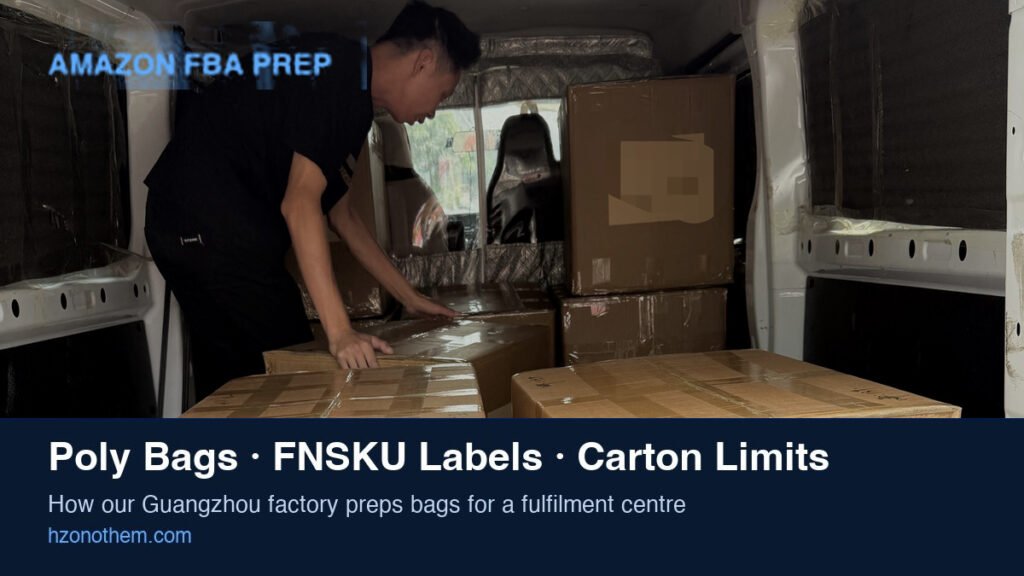
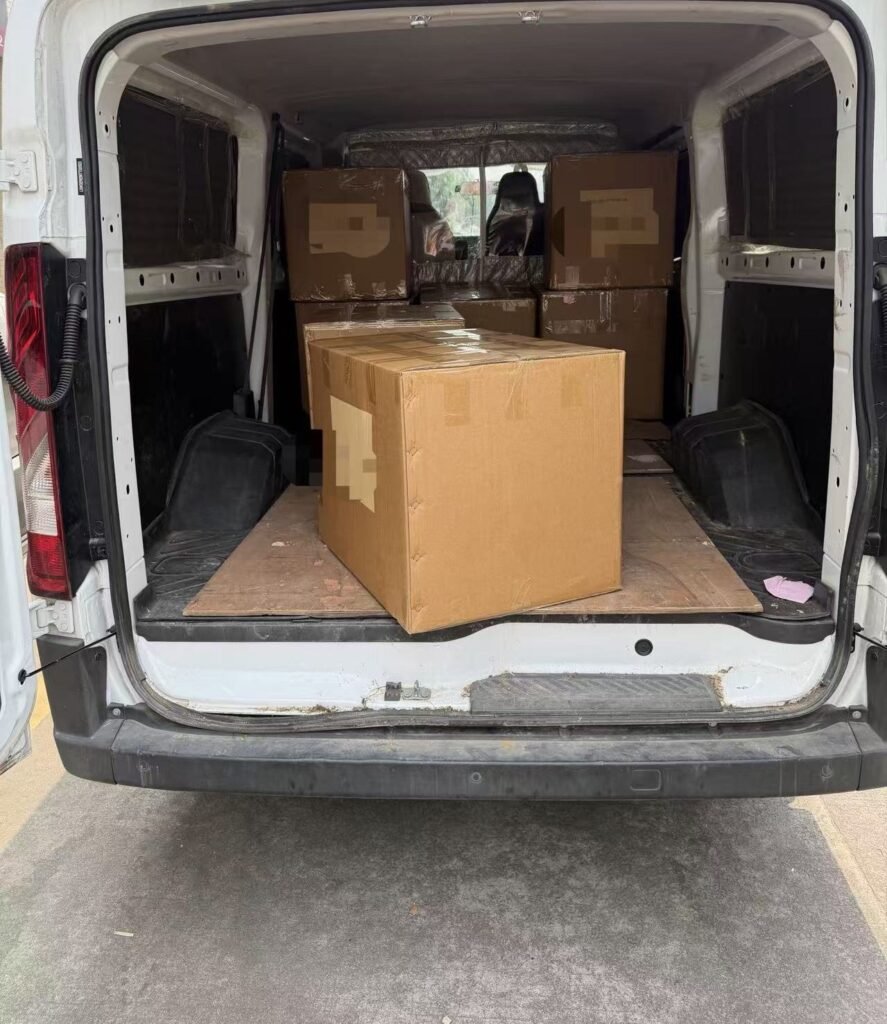
Amazon has its own requirements for how goods are packed and labelled before they reach a fulfilment centre. Carton labels, packing lists and inner packing need to follow the format the platform specifies — and if they do not, the shipment is refused on arrival rather than corrected.
Their own store has the opposite requirement. There, the packaging is part of the product: it needs to look like the brand, because the customer opens it at home.
Solving this by packing two entirely separate runs would have been far too expensive at their volume. So we built one production run that serves both: the bags are identical, and the packing stage diverges — platform-compliant cartons for one destination, branded packaging for the other.
That single decision is the reason this client could supply two channels on a 30-piece-per-month starting scale.
The seasonality problem
School bags are not a flat-demand category. Demand in most markets concentrates heavily around the start of the school year.
A buyer planning traditionally has two bad options: order a large volume before the season and carry the risk, or order late and run out during the only weeks that matter.
What worked here was building stock in waves rather than in one commitment. Starting at 30 pieces per month and reordering against actual sales meant the pre-season build-up happened gradually, with each wave informed by the previous one. By the time the season arrived, the quantity was a decision made from data rather than a guess made in advance.
This is only possible with a supplier who will accept small repeat orders. A minimum of several hundred pieces forces the buyer into one large, early, irreversible bet — which is exactly the bet most sellers lose in a seasonal category.
Building a school bag that survives the year
The category has its own quality priorities, and they are not the same as for a leather bag:
- Zippers above everything. A bag that fails at the zip is unusable, and children are hard on zips.
- Strap and handle attachment. Load-bearing seams are where school bags fail first.
- Base reinforcement. The base takes the abuse, and a reinforced base is cheaper than a return.
- Lining and interior pockets. Thin lining tears at the seams long before the outer material wears.
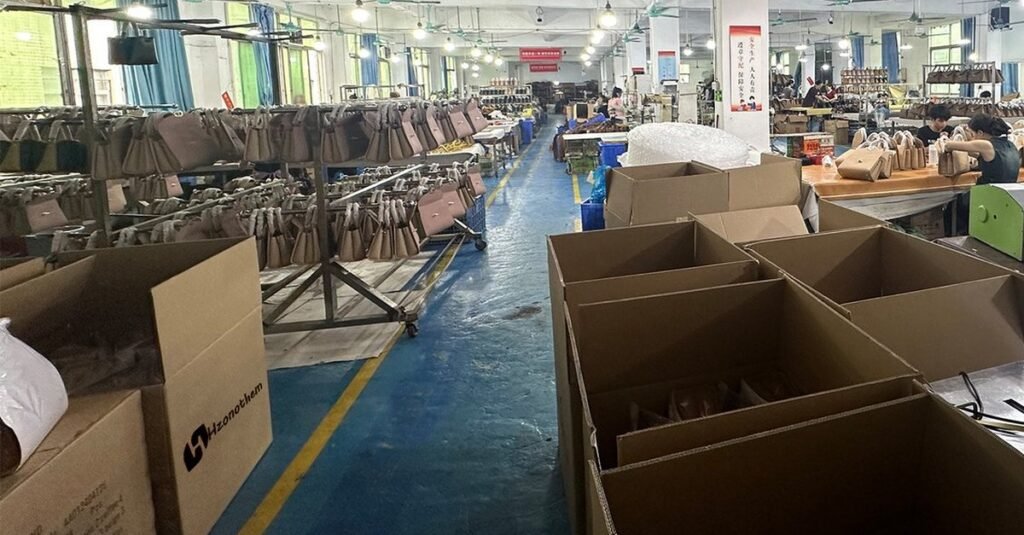
Stitch density is set to the agreed specification for each style, and inspection runs at material intake, during production and at final packing. Our defect rate is held under 2%.
Consistency across channels and seasons
Selling the same product on two channels doubles the number of customers who will compare their purchase to someone else’s. A parent who buys the same backpack for a second child in the following school year is comparing it against the first one.
Keeping material, hardware and construction fixed across repeat orders is what makes that comparison favourable. It is also why the client’s reorders are fast: the pattern and specification exist, so nobody is re-deciding anything.
The result
| Stage | Monthly volume | What changed |
|---|---|---|
| First order | 30 pieces | Testing one style at their real scale |
| Ramp-up | Increasing month on month | Reordering against sales, building into the season gradually |
| Current | 400 pieces per month | Two channels supplied from one run, with a stable specification |
What this case shows that the others do not
Our leather handbag case study is about material specification and reorder discipline. Our Japan case study is about consistency across a long relationship.
This one is about something else: a low minimum order is what lets you sell a seasonal product in two channels without taking a large early gamble. The product decisions were straightforward. The flexibility was the advantage.
Frequently asked questions
Can one production run supply both Amazon and my own store? Yes. The bags are identical; the packing stage is configured per destination. Agree the carton label and packing list format before production finishes.
What materials suit school backpacks? Oxford and canvas for durability at a low price point, and microfiber for a better hand-feel at a mid price point.
How do I plan for a seasonal peak? Build in waves rather than one order. Start early, increase as the data comes in, and keep a fast reorder available for the weeks that matter most.
What is the minimum order? 50 pieces per style, and we can discuss smaller quantities for a first trial on an existing style.
Do you supply the carton labels in the platform format? Yes, provided you send the required format with the order. Getting this wrong is one of the most common causes of receiving delays.
Test a seasonal product without betting on it
Send us the style, your monthly requirement and your channel (marketplace, own store, or both). We will tell you what the first order can look like, what the packing options are, and how to build into your peak season without committing early.
Look through our travel backpack and laptop backpack ranges for styles that transfer into a school range, or request a quote.
For the ordering process behind this case, start with the complete sourcing guide.
For school ranges specifically, the styles that transfer well are printed student backpacks, computer bookbags, anti-theft backpacks and vacuum compression backpacks.
The packing rules behind that Amazon order are in Amazon FBA bag packaging, and the sourcing basics in our MOQ guide.