Two backpacks can look identical in a listing and sit in completely different legal categories. Sell one to adults and you self-certify with a General Certificate of Conformity. Market the other to a twelve-year-old and you are inside the CPSIA, which means third-party lab reports, a Children’s Product Certificate that only a US company can sign, and a tracking label that has to survive the life of the bag. This is the part of a school-backpack order that catches buyers at the very end — after the sample is approved and the price is agreed — when Amazon asks for documents the factory cannot hand over.
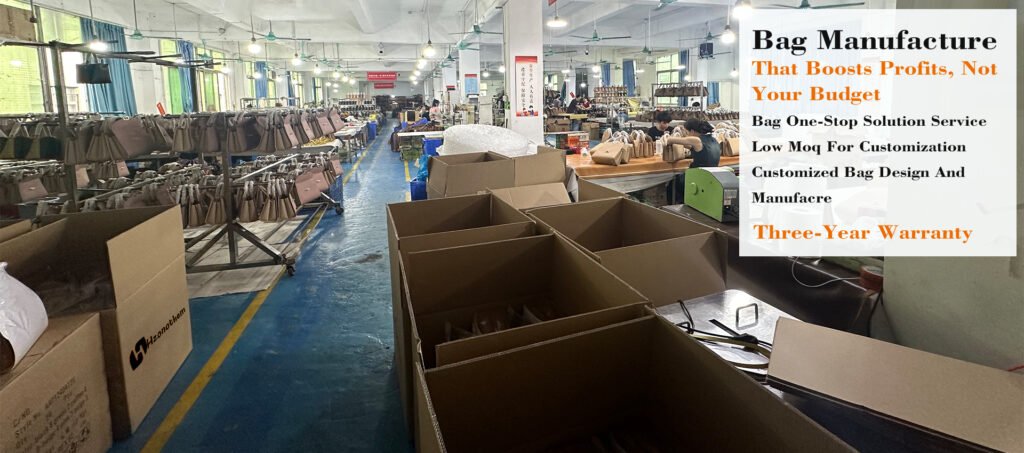
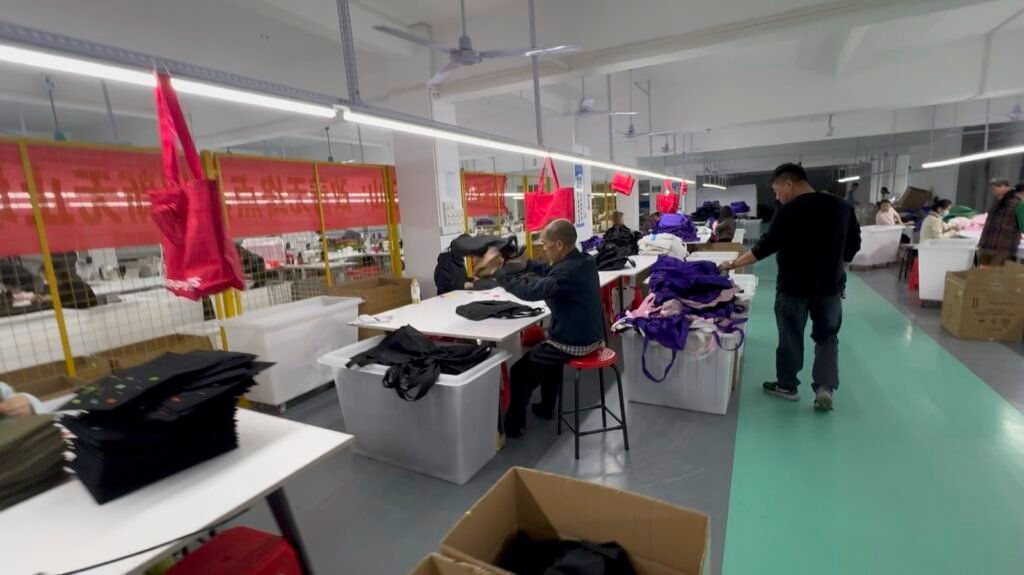
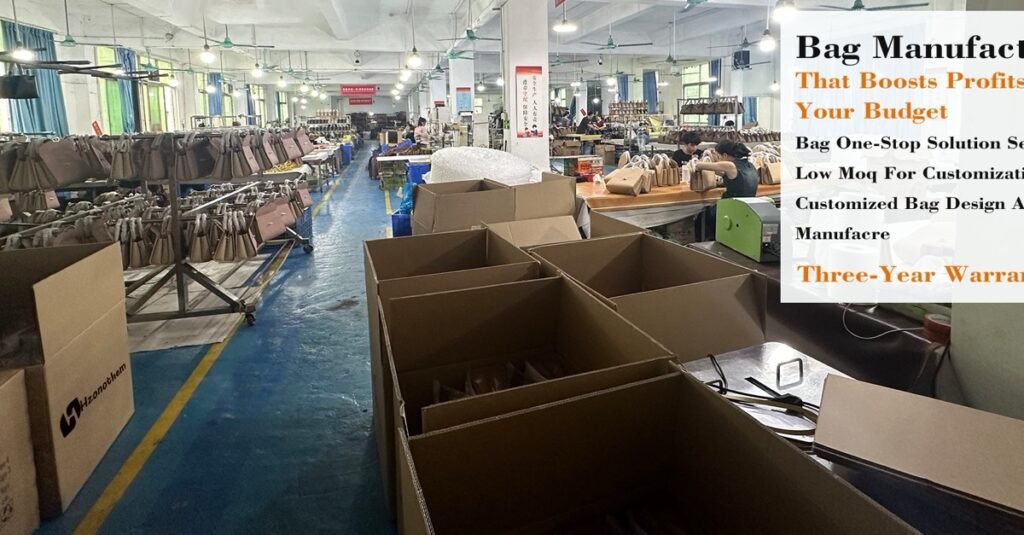
We are Guangzhou Xinming Leather Co., Ltd., the factory behind the HZONOTHEM brand. We have been building bags in Huadu District, Shiling Town since 2006, and school backpacks are one of the lines we actually run — eight production lines and about 65 people, shipping more than 200,000 bags a year to 270+ brands. So this is not a summary of a regulation we read online. It is how we prepare a children’s backpack order for a US buyer, and where the order usually stalls if the compliance questions are left to the last week.
First: is it actually a “children’s product”?
Under the CPSIA, a children’s product is one designed or primarily intended for children twelve years old and younger. The CPSC does not ask what the bag looks like; it asks how you market it. A backpack with a lunchbox pocket, a cartoon print, a junior size run, or a listing that says “school backpack” pushes it into the children’s category. Once it is a children’s product, the adult shortcut disappears: no more self-certified GCC. You need a CPC, and a CPC has to rest on test reports from a CPSC-accepted laboratory.
We usually see buyers realize this late. The clearest line we give them is simple: if a parent would buy it for a child to take to school, assume it is a children’s product and build the testing into the order from the start. Reclassifying later is not a recovery path — you cannot list it as adult, get flagged, and then quietly move the category without the documents catching up to you.
What we actually test, and the numbers that matter
We build the pre-production sample in five to seven days, and we hold the production line to under 2% defect rate at final QC. The compliance testing sits on top of that — and it is almost always cheaper to think about before the sample is sewn than after the bulk order is cut.
Lead: 100 ppm in the material, 90 ppm in the paint
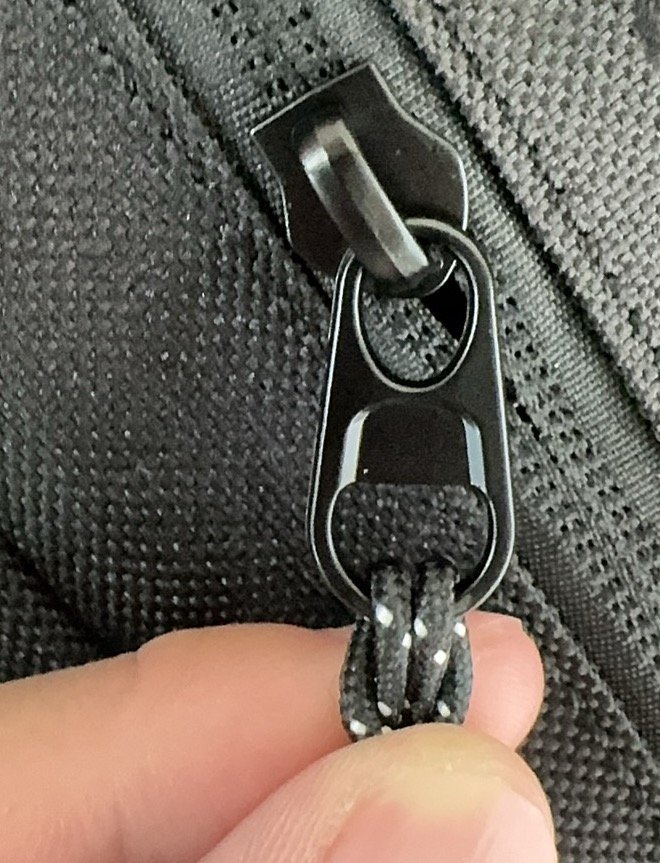
CPSIA sets total lead limits on accessible parts: no more than 100 ppm in the substrate material and no more than 90 ppm in surface coatings. For a school backpack, “accessible” reaches farther than buyers expect. The zipper and its pull are accessible. So are the buckles, the metal feet, the printed logo, the painted lining snap — all of it. We test those components, not just the fabric.
On our line, the quiet cost driver is how many different materials and colors go into one bag. Every colorway of nylon, every paint color on a zipper pull, and every screen-print ink is a separate submission to the lab. A buyer who designs one bag in six colors is not testing one backpack; they are testing six. We usually recommend testing the worst-case material set first, then having the lab cover the rest on a composite basis where the lab allows it. That is the kind of thing that only matters after you have placed a real order and seen the lab invoice.
Phthalates: 0.1% on the plasticized parts
The phthalate rule in CPSIA Section 108 was written around toys and child care articles, and the limit is strict: each restricted phthalate may not exceed 0.1% in accessible plasticized components. In practice, school backpacks get pulled into it because of one soft part — a PVC patch, a rubberized handle coating, a vinyl name-card pocket. Amazon’s compliance team asks for phthalate reports on exactly those parts. If the backpack has no soft plastic, the question mostly goes away; if it has a glossy PVC patch sewn on the front, expect to test it.
This is where the honest tradeoff sits. A soft PVC patch is cheap and photographs well. It is also the single most likely reason a children’s backpack fails a phthalate screen. We often suggest swapping that patch to a woven or silicone alternative at the sample stage. It costs a little more per piece and removes a failure point that would otherwise surface weeks later, after the goods are already made and the payment is already moving.
Tracking labels: in the seam, not on the carton
Every children’s product must carry a permanent tracking label, and “permanent” is the word buyers get wrong. The label has to carry the manufacturer or private labeler’s name, the location, the month and year of production, and a batch or run identifier — and it has to be attached to the product itself. Not printed on the box. Not on a hang tag a customer throws away. We sew it into a seam or print it on the lining before the bag is closed. A label that only exists on the carton is the most common CPSIA failure we see from other suppliers, and it is a failure you discover at customs or at an Amazon review, not on the factory floor.
The tracking label is also one reason we ask buyers to fix the final business name early. The label has to match the importer of record. Change the legal entity halfway through the order and every tracking label on every bag is wrong.
Who signs what: the CPC is yours, not ours
Here is the part that surprises people. We can arrange the testing, hand you the reports, and build the bag to pass. We cannot sign your Children’s Product Certificate. The CPC is the importer’s document, signed by the US importer or domestic manufacturer. It lists that company’s name, address and contact information alongside the product, the rules it meets, the lab, and the date and place of testing. A supplier who offers to “issue the CPC for you” is either confused or is about to sign a document that does not belong to them.
We hit this on a real school-backpack order. The buyer asked us to just give them the certificate so they could list on Amazon. We could not — and should not. What we did instead was line up the lab, get the lead and phthalate reports, confirm the tracking-label wording against their US entity, and hand the reports over so their US office could sign the CPC the same afternoon. The listing went live that week. The distinction did not slow them down once it was set up correctly; what would have slowed them down was a fake or mis-signed certificate.
Factory does, importer does
| Step | The factory (us) | The US importer (you) |
|---|---|---|
| Sample and spec | Build the pre-production sample; confirm materials, colors and components | Approve the sample; fix the legal entity name early |
| Testing | Arrange a CPSC-accepted lab; provide the material and component samples | Pay the lab; receive the test reports |
| Documents | Provide test reports, production information and tracking-label text | Sign the CPC; keep the records |
| Labeling | Sew the permanent tracking label into the product | Confirm the importer-of-record name and address |
| Listing | Nothing to sign | Upload the CPC and reports to Amazon |
The Amazon order of operations
For a kids’ backpack going onto Amazon, the sequence matters more than the documents. Test before you produce, not after. A CPC cites the lab results for the exact product you are selling, so testing a sample and then changing the zipper pull or the PVC patch invalidates the certificate. We usually run the lab submission from the approved pre-production sample — the same golden sample that locks the bulk production standard.
Then the tracking label has to be inside the bag when it is sewn. Then the CPC is signed against the final importer entity. Only then does the listing have everything Amazon asks for. We cover the packaging side — hang tags, FNSKU labels and poly bags — in our Amazon FBA packaging guide, and the wider label rules in our US and EU labeling guide. For timing the inspection step, our third-party bag inspection article walks through when the $350 check is worth it and when it is not.
Three mistakes that get a school-backpack listing pulled
The tracking label is on the carton, not the bag. A label printed on the export box does not meet the “permanent” requirement. We put the label into the product itself so it cannot be separated from the bag.
The CPC is signed by the factory, or cites a lab that is not on CPSC’s accepted list. Both fail the same way: the certificate does not hold up when Amazon or a customs broker actually reads it. The signer must be the US importer or domestic manufacturer, and the lab must be CPSC-accepted for the test it ran.
The tested sample is not the bag that got produced. A buyer approves a sample, then changes the zipper to a cheaper pull, adds a color, or switches the patch — and the certificate now describes a product that was never shipped. This is why we lock the spec at the golden sample and treat any later change as a re-test, not a footnote.
What to send us on day one
A children’s backpack order goes smoother when the compliance questions are answered in the first email, not the last. Send us the US legal entity that will appear on the tracking label and sign the CPC, the age range you are marketing to, and the full list of materials and colors. From there we can tell you which parts will need lead and phthalate reports, and whether the design has a soft-plastic component worth swapping out before you pay for the sample.
For the full picture of how we build bags — the materials, the minimums, the lead times, and how to check a factory before you commit — start with our leather bag manufacturer guide. The school-backpack case study shows how one US client moved this exact product onto Amazon and a brand store. We are the factory in that story, and the compliance setup above is the part of it that never made the marketing copy.