Carry-on backpacks sell on one promise: it fits. Get the external dimensions wrong by two centimetres and every customer who has ever had a bag gate-checked will return it. This page is written for buyers sourcing carry-on and travel backpacks — what to specify, what airlines actually measure, and where the cost sits.
We manufacture travel and carry-on backpacks in Guangzhou at MOQ 50 pieces per style.
1. Size to the airline rule, not to the litres
The common carry-on allowance is around 55 × 40 × 20 cm, and the personal-item allowance around 45 × 36 × 20 cm — but airlines differ, and low-cost carriers measure the hard external size including handles, wheels and compression straps. Two practical rules:
- Specify external dimensions and internal volume. A pack sold as “40 L” that measures 58 cm tall will be gate-checked.
- Decide the market. US carriers are more forgiving than European low-cost lines; if you sell into both, build two SKUs rather than one compromise.
2. Opening: clamshell or top-zip
A clamshell opens flat like a suitcase and packs far more easily. A top-zip is lighter, cheaper and less appealing to a pickpocket because there is no full-length opening. Buyers in the business segment usually want top-zip with a padded laptop sleeve; the backpacking segment wants clamshell. This choice also changes the panel structure, so it must be settled before the pattern.
3. Laptop compartment, in millimetres
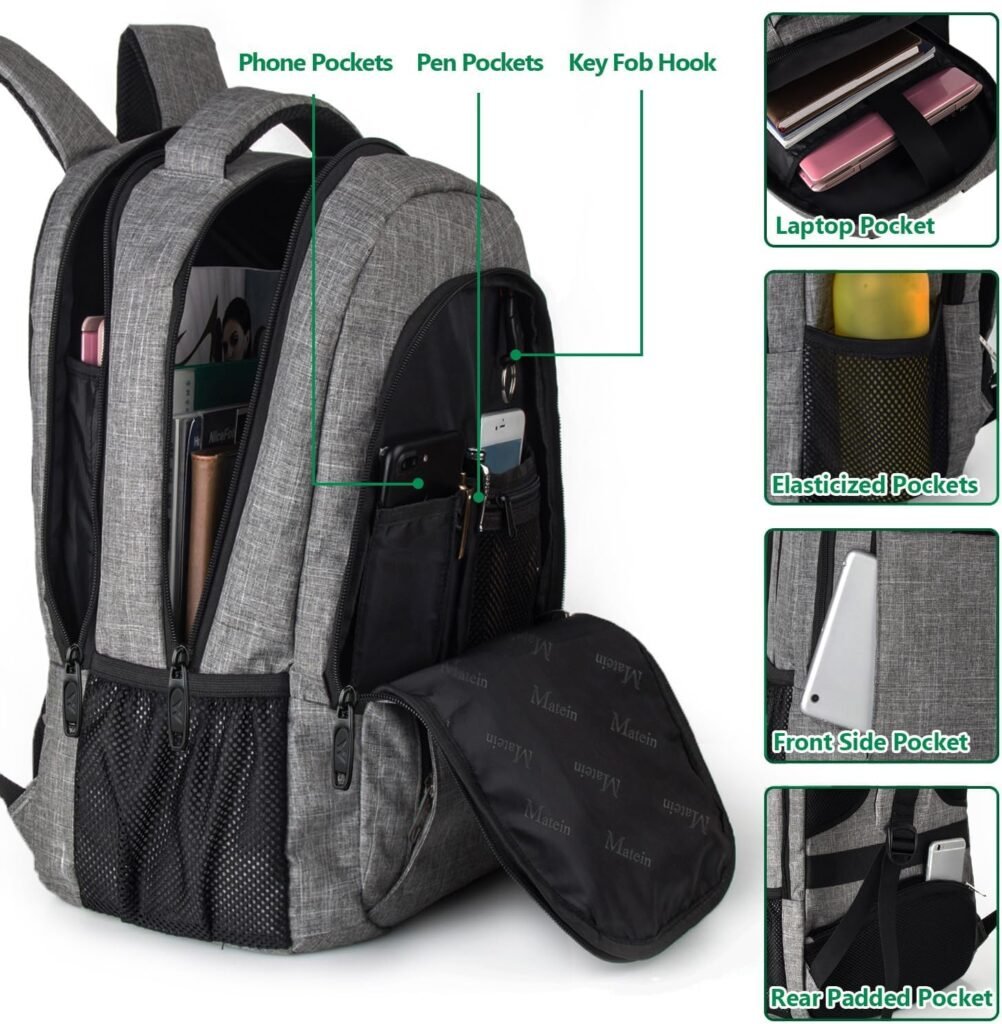
Give us the internal sleeve dimensions and the laptop class you are designing around — 14-inch for most of Europe and Japan, 15.6–16-inch for the US. A false bottom keeps the laptop off the base of the bag, and a separate tablet pocket behind the sleeve is a cheap upgrade that shows in reviews.
4. Weight is a specification, not a by-product
Airline cabin allowances are usually around 7–10 kg including the bag. That makes the bag’s own weight a selling feature: state it in grams, and put it in the listing. Lightweight construction comes from thinner but higher-denier fabric, less metal hardware and a lighter lining — all of which must be chosen at the specification stage. Weigh the production sample and confirm the figure before bulk.
5. Features that separate a travel pack from a commuter bag
- Compression straps so the bag shrinks when half-packed
- A luggage pass-through that actually fits a telescopic handle (specify the width)
- A separate shoe or laundry compartment with a wipe-clean lining
- Lockable sliders if you are selling security
- A short carry handle on the side, rated for a loaded bag
6. Materials by price bracket
Oxford (600D or 1680D), nylon ripstop, waxed canvas, microfiber leather and genuine leather. For cold markets, ask about coating flexibility below freezing — a film that stiffens and cracks is a warranty problem. Our winter-market guide covers this for leather specifically.
7. Samples, MOQ and QC
Pre-production samples take 3 to 5 days and you approve a physical piece before bulk production starts. MOQ is 50 pieces per style, splittable across colours. Inspection covers dimensions (measured against the airline spec you gave us), seam strength, strap anchors, zipper function and hardware seating; our defect rate is held under 2% and every bag carries a 3-year warranty. See the QC checklist.
Frequently asked questions
Can you build a backpack that fits specific airline limits?
Yes — give us the airline and class (carry-on, personal item) and we build the pattern to those external dimensions, then confirm the measurements on the sample.
What is the MOQ for a travel backpack?
50 pieces per style. Colourways within one style can be mixed to reach the minimum.
Do you make both a men’s and a women’s version of the same pack?
Yes — usually the same body with a different back panel and strap geometry, which keeps your tooling and photography cost down.
Talk to us about your first order
Tell us the market you sell into, the airline size you need, your quantity per style and whether you need branding. You will get a price within 24 hours. Browse travel backpacks, large travel backpacks, travel laptop backpacks and the full travel and school range — or get a quote.
Planning a carry-on range for a season? Lead times decide your launch date, and this guide covers shipping and import costs.